
If your water heater is due to be replaced or you’re planning ahead before it gives out, you’ve probably run into the big question: stick with a traditional tank, or switch to tankless?
Both have real advantages. Both have tradeoffs. The right choice depends on your home, your hot water habits, and how long you plan to stay put. Here’s a clear breakdown to help you decide.
What is a traditional water heater?
A traditional water heater is the type most homes have: a large insulated tank (usually 40 to 80 gallons) that holds hot water and keeps it heated continuously, so it’s ready whenever you turn on a tap.
Cold water enters the bottom of the tank, where a gas burner or electric heating element warms it. The hot water rises to the top, where it gets drawn off when you turn on the shower, dishwasher, or laundry. A thermostat maintains the temperature so the tank is always ready to go.
It’s a simple, proven design. The main limitation is that once you use up the hot water in the tank, you have to wait for it to refill and reheat.
What is a tankless water heater?
A tankless water heater (sometimes called an on-demand water heater) skips the storage tank entirely. Instead of keeping a tank of hot water ready, it heats water only when you need it.
When you turn on a hot water tap, cold water flows through the unit, past a heat exchanger that warms it instantly. As long as the tap is running, hot water keeps coming. When you shut it off, the unit stops heating.
Tankless units are smaller (about the size of a suitcase, usually wall-mounted) and don’t have a standing tank of water that could leak. They’re powered by gas or electricity, with gas being the more common choice for whole-home applications.
Pros and cons of each type
Here’s how the two stack up across the things homeowners actually care about.
Traditional water heaters
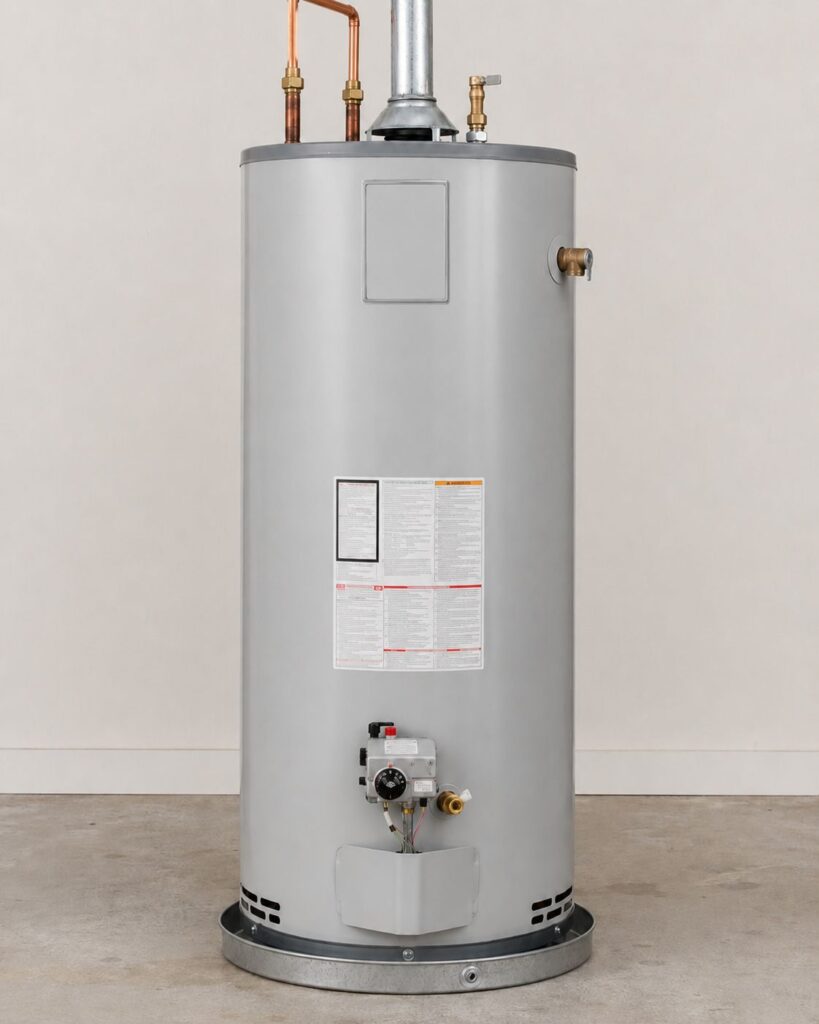
Pros:
- Lower upfront cost — both the unit and the installation are less expensive
- Simpler installation, especially when replacing an existing tank
- Works well with simultaneous demand (multiple showers, laundry, dishwasher) up to the tank’s capacity
- Familiar technology that most plumbers can service
Cons:
- Limited supply — once the tank’s used up, you wait for it to reheat
- Standby energy loss from keeping water hot 24/7
- Shorter lifespan (typically 8 to 12 years)
- Takes up significant floor space
- If the tank fails, you can end up with 50 gallons of water on your basement floor
Tankless water heaters
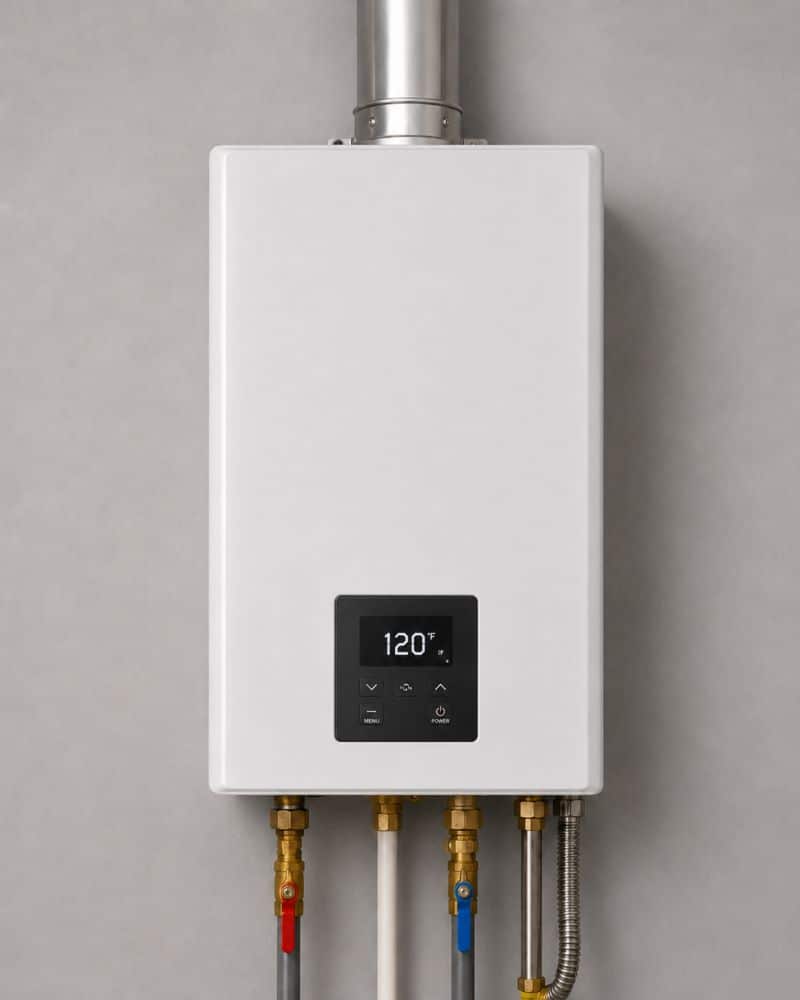
Pros:
- Endless hot water as long as the unit can keep up with demand
- Longer lifespan (often 15 to 20 years)
- Compact, wall-mounted footprint frees up floor space
- More energy efficient — you only heat water when you need it
- No risk of a tank failure dumping water in your basement
Cons:
- Higher upfront cost, both for the unit and installation
- May require upgrades to gas lines, venting, or electrical service
- Output is limited by flow rate — running multiple hot water fixtures at once can strain a single unit
- Performance drops in very cold incoming water (winter in Chicago is a real factor)
- More complex to service, with fewer plumbers trained on them
Maintenance and repairs
Traditional tanks need an annual flush to clear out sediment, which extends the life of the unit. The most common water heater repairs involve heating elements, thermostats, or the anode rod. When a tank starts leaking, it’s usually time to replace the whole unit.
Tankless units need to be descaled periodically — especially in areas with hard water, which Chicago has plenty of. Without descaling, mineral buildup reduces efficiency and can damage the heat exchanger. Repairs tend to be more specialized and parts can be pricier, but the units themselves last longer.
Costs (including energy bills)
Tankless units cost more upfront. Including installation, you’re typically looking at roughly double the cost of a traditional water heater replacement, sometimes more if your home needs a gas line, venting, or electrical upgrades.
On the operating side, tankless units generally use less energy because they’re not maintaining a tank of hot water around the clock. Most households see a noticeable drop in their gas or electric bill, though the exact savings depend on your usage patterns, the unit’s efficiency rating, and your utility rates.
The longer lifespan of a tankless unit also factors into the math. A traditional tank you’ll likely replace once or twice over the same period a tankless unit lasts.
Other considerations
A few things worth thinking about beyond the basics:
- Household size and habits: A family of four running back-to-back morning showers gets different value from each setup than a couple with modest hot water needs. Tankless shines when demand is steady or spread out; traditional handles big simultaneous draws better at a given price point.
- How long you’ll stay in the home: Tankless makes more financial sense the longer you own the house. If you’re planning to move in the next few years, the math may not work in your favor.
- Available space: If basement space is at a premium, the wall-mounted footprint of a tankless unit is a real advantage.
- Existing infrastructure: A like-for-like traditional tank replacement is usually straightforward. Switching to tankless can require upgrades that add to the project cost.
- Resale value: Tankless is increasingly seen as a premium feature, which can help when it comes time to sell.
Which is right for your home?
There’s no one-size-fits-all answer. For homeowners with high hot water demand, long-term plans in the house, and the budget for the upfront investment, tankless often wins on lifetime cost and convenience. For homeowners replacing on a tight timeline or budget, or with a home that would need significant upgrades to support tankless, a traditional tank may make more sense.
If you’re weighing the options and want a second opinion based on your specific home, Madden Sewer & Drain is happy to take a look and walk you through what would actually be involved. Family-owned and serving Chicago homeowners for over 60 years, we are a highly rated Chicago plumbing company with a 4.9-star rating across 300+ Google reviews.
Call 773-588-7534 with any questions — even if you’re just gathering information.